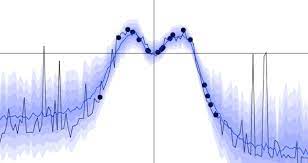
In the world of machine learning, most models behave like confident oracles—they make predictions with unwavering certainty, even when they are wrong. But real-world decisions often demand more humility. When an AI system diagnoses a disease, drives a car, or assesses financial risk, it’s not enough to predict an outcome—it must know how sure it is about that prediction. This is where Bayesian Deep Learning steps in, turning blind confidence into informed caution.
Rather than being just another branch of deep learning, Bayesian Deep Learning introduces a new dimension: uncertainty awareness. It helps models quantify how confident—or uncertain—they are about their predictions, bridging the gap between artificial precision and human-like reasoning.
The Problem of Overconfidence in Neural Networks
Imagine a pilot flying through dense fog with a broken radar—still confidently steering but unaware of what lies ahead. Traditional neural networks operate in much the same way. Once trained, they output predictions without indicating whether they’re reliable.
This limitation becomes critical in high-stakes situations—like medical imaging or autonomous vehicles—where a wrong but confident prediction can lead to disastrous consequences. Neural networks are deterministic by design, meaning the same input will always produce the same output, regardless of how uncertain the model might actually be.
Bayesian Deep Learning, on the other hand, restores the “radar” by incorporating probability into neural networks. It treats the model’s parameters as distributions rather than fixed values, allowing it to express confidence levels in predictions.
For learners aiming to master such advanced methods, enrolling in an artificial intelligence course in Bangalore can provide hands-on exposure to uncertainty quantification, model calibration, and probabilistic reasoning—all essential skills for modern AI applications.
Introducing Bayesian Thinking to Deep Learning
Think of Bayesian Deep Learning as a conversation between curiosity and experience. Every new piece of data acts as an update to what the model already believes, refining its understanding of the world. This is rooted in Bayes’ Theorem, which essentially combines prior knowledge with new evidence to make better predictions.
In this approach, instead of having a single set of weights, the neural network maintains a distribution of possible weights. During inference, the model samples from these distributions multiple times, producing a range of predictions rather than a single outcome.
This ensemble of predictions forms a probability distribution—enabling the model to say not only “what” it predicts, but also “how sure” it is. Such awareness is vital in decision-making systems, where knowing when not to act can be just as important as taking the right action.
Types of Uncertainty: Aleatoric vs Epistemic
Not all uncertainty is the same. Bayesian Deep Learning classifies it into two primary types:
- Aleatoric Uncertainty – This arises from the data itself. It’s the natural randomness or noise that can’t be reduced, such as imperfect sensors or inconsistent human labelling.
- Epistemic Uncertainty – This comes from a lack of knowledge. The model simply hasn’t seen enough data or hasn’t learned the patterns well enough yet.
By quantifying epistemic uncertainty, Bayesian methods help identify blind spots in data collection or model training. For example, if a model is uncertain when predicting outcomes for a specific region or demographic, it may signal a lack of representation in the dataset.
Understanding this distinction helps data scientists know where to focus their improvement efforts—reducing noise or gathering more data to reduce ignorance.
Practical Implementations and Challenges
Implementing Bayesian methods in deep learning isn’t without challenges. Traditional networks are already computationally demanding; adding probability distributions increases the complexity significantly. However, techniques like Monte Carlo Dropout, Variational Inference, and Deep Ensembles make Bayesian approaches more practical without sacrificing scalability.
These methods provide approximate Bayesian inference, striking a balance between accuracy and efficiency. They have been successfully applied in healthcare diagnostics, self-driving systems, and climate modelling—domains where uncertainty can’t be ignored.
Professionals mastering these techniques often start with structured programs like an artificial intelligence course in Bangalore, where concepts such as stochastic gradient descent, variational autoencoders, and uncertainty estimation are explored through real-world case studies.
The Future of Trustworthy AI
As artificial intelligence increasingly influences critical sectors, the need for trustworthy, interpretable models becomes urgent. Bayesian Deep Learning represents a significant step toward that goal by embedding awareness into intelligence.
It enables AI systems to reason like humans—acknowledging doubt, adapting to new evidence, and communicating confidence transparently. Instead of treating uncertainty as a flaw, it turns it into a strength.
Conclusion
In a world obsessed with certainty, Bayesian Deep Learning reminds us that intelligence lies not in always being right, but in knowing when we might be wrong. It gives neural networks the humility to admit uncertainty—a vital trait when decisions have real-world consequences.
Just as experienced pilots depend on their instruments to handle turbulence, data professionals utilise probabilistic tools to manage complex models. Those who establish a strong foundation through formal education gain the skills needed to develop AI systems that are not only powerful but also responsible, interpretable, and safe for the future.