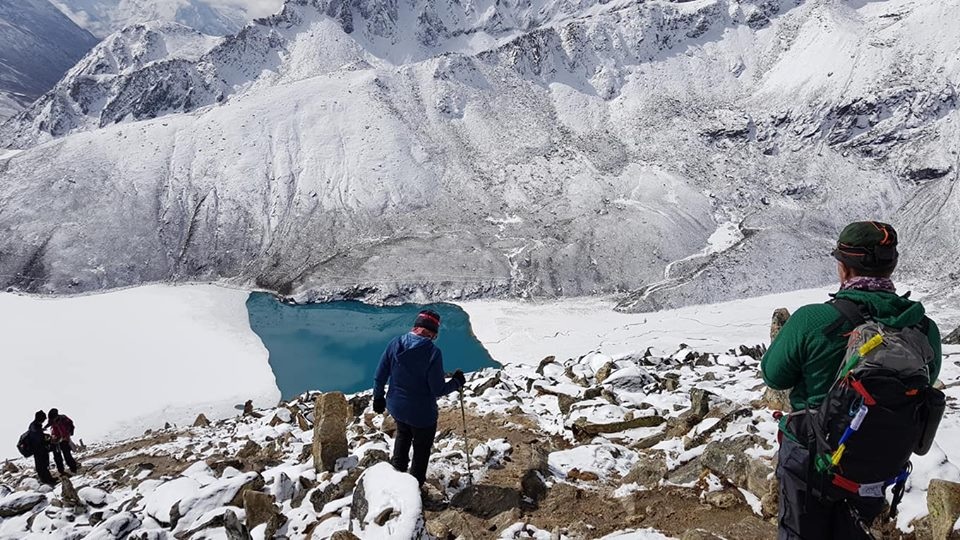
Trekking the Gokyo & Everest Base Camp Route with Sherpa guides isn’t only a way to experience the Himalayas, it’s the journey that makes it all extraordinary. The scenery alone is spectacular, with emerald green glacial lakes, vistas of majestic mountains, and iconic sites such as Everest Base Camp and Kala Patthar. But it is the Sherpas that make the experience a cultural, personal, and spiritual adventure rather than a physical challenge. Their unparalleled expertise on the terrain, weather patterns, and high-altitude physiology will provide the safest and most successful experience possible, but more than that, their bond with the mountains will imbue your every step with meaning.
Everest Base Camps Sherpas are the true legends of the Himalayas. Their lineage, molded by centuries spent living at altitude, gives them an intimate knowledge of the earth that no map or guidebook can provide. But as you walk side by side with them, you acquire more than a guide, you learn about a way of life based on endurance, humility, and respect for nature. They tell you stories about Everest, explain Buddhist customs, and provide quiet encouragement when the trail gets difficult. Just like them, you’re not just walking the path, you are stepping into a genuine heritage.
From watching the sunrise over Everest from Gokyo Ri, to crossing the frozen Cho La Pass, to standing in front of the Khumbu Icefall, I feel deepened, impacted, every moment by their presence. Trekking with Sherpas is a game-changer, not because it makes the route easier, but because it makes the experience richer, more connected, and unforgettable.
Embarking On A Life-Changing Journey
Hiking the Himalayas is more than just an adventure— it’s a life-changing experience that alters your perspective, builds your strength, and helps you connect with nature and culture. In fact, even before setting foot in the Everest region, you’re already transported into a world defined by the mountains that it produces, where every step becomes a sort of spiritual awakening.
This trek, however, is different than going on a regular vacation — it challenges the body as much as the mind. It won’t be easy, with steep trails, high altitudes, and unpredictable weather testing you, but you’ll gain clarity, peace, and purpose along the way. With each climb, you leave the cacophony of metropolitan life behind and enter a world where quiet, minimalist splendor dominates.
The journey is made all the more colorful by the people who inhabit the region, as much as by the towering peaks and glacial valleys. The Sherpa culture, known for its spirituality, bubbling hospitality, and resilience you can sense, becomes one with your experience.
As you stroll through centuries-old villages, visit mountaintop monasteries, and see prayer flags fluttering in the breeze, you’ll sense a stronger link to something eternal and sacred. The hike teaches patience, gratitude, and resilience — and often it’s in the siya of the peaks where trekkers learn the most about themselves.
This is more than getting somewhere. It’s about personal evolution, the appreciation of culture, and writing stories that you’ll carry with you forever. A spiritual trek through the Himalayas isn’t only an exploration of landscapes — it’s an exploration of the self.
Who Are the Sherpas?
Himalayan Base Camp Trek Few ethnic groups are more famous than The Sherpas of the Himalayas, known worldwide as high climbers and porters, their unique culture imbued with a vibration of resilience and adaptation. Sherpas, who are originally from the eastern parts of Tibet, migrated to Nepal hundreds of years ago, settling predominantly in the high-altitude areas of Solukhumbu District, which is near Everest.
Generations of living in these extreme altitudes have given Sherpas incredible endurance and capacity to adapt to low-oxygen environments. Himalayan expeditions have come to rely on this biological advantage, compounded by their familiarity with the terrain.] They have formed the backbone of countless successful ascents, including the historic 1953 summit of Everest by Sir Edmund Hillary and Tenzing Norgay — a Sherpa himself.
But Sherpas are much more than high-altitude porters or guides. Their lifestyle is based on community, spirituality, and nature — dimensions of culture that Nancy says are closely tied to Tibetan Buddhism. Villages such as Namche Bazaar, Khumjung and Pangboche are living embodiments of Sherpa culture, monasteries, prayer wheels, and festivals illuminating life in the folds of the mountains.
They speak their own language, practice their own customs, and are very family-oriented people. Their grit, humility, and generosity have won the admiration of trekkers worldwide.
To know the Sherpas is to know the spirit of the Himalayas. Dare I say, they are your guides not only through the physical mountains you are crossing, but the cultural and spiritual peaks of the journey, sharing insights that will add meaning to the trek.
The Sherpa Edge on the Trail
Having Sherpas at your side when trekking through the Himalayas gives you an unparalleled advantage and not just of a logistical kind. Sherpa guides and porters offer an unparalleled level of experience, cultural understanding, and sincere interest that enhances every step of the adventure.
Thanks to generations of experience navigating and working in high-altitude environments, Sherpas have an unparalleled familiarity with the local topography, weather systems, and best practices for safe mountain travel. That knowledge can be the difference between a successful trek and an outing that’s cut short due to poor planning or altitude sickness. They’re trained in first aid, can spot early signs of altitude-related problems, and have the skills to respond with steady precision.
But their advantage is not just physical. Sherpas are leaders by nature, too, and compassionate companions. Their relaxed pace and constant cheerleading and concern for your well-being feels safe and familiar. They lug heavy loads easily, often with a smile, and still have enough left in the tank to make sure you are comfortable at each tea house along the way.
They double as cultural translators — telling stories, explaining the meaning of prayer flags, or directing you through rituals at monasteries. This immersion in Sherpa traditions imbues the journey with emotional resonance.
From maneuvering you through rugged terrain to helping you acclimatize to preparing a warm meal at altitude, the Sherpa advantage is in their quiet strength and deep-seated connection to the mountains. Having a Sherpa at your side means the trail is not just easier—but infinitely deeper and more intense.
Cultural Notes Along the Way
Everest Base Camp When you trek through the Himalayas, you’re not just trekking across some of the most stunning landscapes on the planet: You’re diving deep into one of the world’s most unique — and spiritually rich — cultures. Travel between villages immerses you in the customs, beliefs, and daily living of the Sherpa people, whose traditions have been honed over centuries in the high mountains.
From the fluttering prayer flags that mark the trails to the stone-carved mani walls featuring sacred inscriptions, every detail of the trek is filled with significance. You’ll walk past ancient monasteries and hear the chants of monks ringing off the valleys, and see spinning prayer wheels — a dramatic expression of devotion in Tibetan Buddhism.
The architecture in the Sherpa villages is practical as well as traditional, stone houses built to withstand the elements, with intricate carvings on doors and windows. In places like Namche Bazaar or Khumjung, you can visit local schools and cultural museums, learning how the economic challenges of modern life are balanced by the Sherpas’ efforts to preserve their way of life.
Hospitality is another pillar of the Sherpa culture. You’ll be greeted in tea houses with a cup of yak butter tea or bowls of steaming dal bhat, and, if your timing is right, added to local ceremonies or festivals.
These cultural moments aren’t just side experiences — they’re at the center of the trek. They transform a physical ordeal into a soulful odyssey, imparting lessons about simplicity, gratitude, and spiritual attunement.
A Foolproof Start: First Arrival in Lukla
The adventure truly starts with your arrival in Lukla, a mountain town at 2,845 meters (9,334 feet) above sea level known as the “Gateway to Everest.” Arrival is an experience in itself — most trekkers fly in from Kathmandu to the storied Tenzing-Hillary Airport, a short airstrip cut into the side of a mountain. It’s one of the world’s most exciting flights, with spectacular Himalayan views and a thrilling approach.
Once on the ground, there’s an infectious energy in Lukla. Trekkers from around the world come here, unpacking gear, meeting up with guides and stocking up on fuel for the journey to come. The streets are dotted with cozy tea houses, gear shops and local vendors hawking everything from prayer beads to chocolate bars.
Everest Base Camp Trek After final preparations, your trek kicks off as you walk out of Lukla and into the heart of the Khumbu region. The path drops steeply at first but meanders after to follow the Dudh Koshi River through woodland and across suspension bridges. The trail to Phakding, your most likely first overnight stop, is a two-meal introduction to Sherpa culture, with mani stones and chortens and mountain views accompanying you at every step.
The first leg of the trek is all about finding your rhythm — getting used to the altitude, pacing yourself, and absorbing the beauty of your surroundings. If flying into Lukla marks the starting line of your Himalayan odyssey, this is where the true journey, both outward and inward, gets underway.
Trekking to Namche Bazaar
Namche Bazaar is arguably one of the most classic and rewarding treks of any Himalayan experience. This segment of the trek usually takes about two days from Lukla, with one night in Phakding to allow for a gradual altitude increase. The deeper into the Khumbu Valley you walk, the more dramatic the landscape, the thinner the air, and the more immersive the experience.
The trail winds along the turquoise Dudh Koshi River, through pine forests, over suspension bridges, and through villages where colorful prayer flags and spinning wheels hint at the area’s deep Buddhist origins. The best part of this stretch is the Hillary Suspension Bridge, soaring above a thundering gorge — stepping on it feels like stepping into another world.
The last uphill to Namche is tough and steep, but it’s where plenty of trekkers get their first clear view of Mount Everest — a history-making moment. You’ll traverse crisscrossing switchbacks along forest paths, eventually arriving at Namche Bazaar at 3,440 meters (11,286 feet).
Namche is the center of the Sherpa community and a bustling place with tea houses, bakeries, gear shops and local markets. Here, the comforts of modernity merge with traditional culture, providing trekkers a place to rest, acclimatize and recharge.
This walk up to Namche is not just a walk, it’s a rite of passage that teaches you the pace of life in the higher Himalayas and readies you mentally, physically and emotionally for what is to come.
Deep into the Gokyo Valley
Everest Base Camp Treks Deep into the Gokyo Valley, the world begins to feel a little more ancient… As you trek along quiet trails that curl through alpine forests, glacial rivers, and mud-streaked stone-built Sherpa villages, the world starts to change. The air grows crisper, the silences deeper, and the mountains closer with each passing step. This valley is a more tranquil alternative to the crowded Everest Base Camp route, providing solitude and serenity while still serving up breathtaking scenery. The trail rises gradually alongside the Dudh Koshi River, passing through settlements like Dole and Machhermo, each more remote and picturesque than the last. As you climb higher, snow-capped mountain ranges such as Cho Oyu start to dominate the skyline while the Ngozumpa Glacier — the largest in Nepal — appears on the horizon. The Gokyo Valley is more than a route to the lakes or to the Ri: it is a spiritual and visual experience in its own right, a passage through a high-altitude Nepalese sanctuary where tradition and nature blend seamlessly. The culture, the tranquillity, and the arresting scenery combine to make this section of the trail a quiet masterpiece.
The Magic of Gokyo Lakes
The Gokyo Lakes are truly enchanting. These high-altitude, glacial-fed bodies of water are nestled beneath towering Himalayan peaks, mirroring the sky and surrounding mountains with an ethereal sense of zen. The lakes themselves, particularly the third one, Dudh Pokhari, are the core of this remote alpine paradise, scattered throughout the upper reaches of the Gokyo Valley. Their brilliant turquoise color is a sharp contrast to the white and gray of the surrounding snowfields and rocky ridges. But their beauty isn’t just visual: The lakes are sacred to Buddhists and Hindus alike, lending a spiritual aspect to their already transformative presence. When you travel along the shores or sit still gazing at the ripples of reflection, there’s the quickest feeling of peace that washes over you. The sounds are sparse: the wind, the gentle lap of water, maybe the snap of prayer flags. It is an invitation to slow down, to breathe, to just be. It is the beauty of the Gokyo Lakes; pure, unspoiled, and humbling. They show you that nature’s most powerful moments often reside in the quietest of places.
Gokyo Ri: A Beautiful View for Every Step
The ascent up Gokyo Ri is the defining moment of the trek — a moment that requires physical sustainability but provides a visual reward that is second to none. Climbing to 5,357 meters (17,575 feet), this rugged summit is famed for providing one of the best panoramas in the whole of the Himalayas. The ascent begins in the village of Gokyo, and while the trail is steep and difficult, particularly in the predawn cold and thin air, excitement grows with every step. As you climb, the Gokyo Lakes below twinkle like scattered sapphires, with the immenseNgozumpa Glacier sprawling alongside. But it’s the summit that is truly stunning. From high above, four of the highest peaks in the world, including Everest, Lhotse, Makal,u, and Cho Oyu, come into jaw-dropping view. The mountain tops glow with an almost divine light, the incoming sunrise painting the mountains in gold as my shadows stretch long across the valley. It’s a setting where silence speaks more than words, where your physical journey intersects with emotional awe. You’ve earned every step of the climb on this journey to stand on top of Gokyo Ri, and not only for the view you’ll see but for the journey it took to get here.
Confidently Crossing Cho La
Trek to Base Camp Mount Everest Crossing the Cho La Pass is one of the most thrilling and difficult parts of the Gokyo to Everest Base Camp trek. Perched at an elevation of 5,420 meters (17,782 feet), the pass is a test of mental strength and physical endurance. With experienced Sherpas guiding the way, the ascent becomes less discouraging and significantly safer. The trail begins well before dawn, winding through frigid landscapes and steep ascents, with some areas often snowbound or covered in loose scree. Sherpa guides are not only there to lead trekkers along a route, or to help decide on the best time to leave, or maintain pace; these guides are also crucial for motivation (after all, there can’t be a group of 30 trackers and only one Sherpa) and safety in the extremely harsh, high-altitude environment on the mountains. The challenge of scaling the summit is thrilling but well worth the effort. The pass provides breathtaking views of nearby peaks, frozen glaciers, and deep Himalayan valleys. At the summit, prayer flags flap in the faith-filled wind to announce success and lend spiritual energy to an already-electrified environment. The descent into Khumbu is just as dramatic, ushering in the next part of the adventure heading towards Everest Base Camp. What makes this crossing special is not only the terrain but also the reassurance that comes with expert support. With Sherpas forging a path, Cho La no longer serves only as a high mountain pass—but rather as a portal to harsher challenges and a stronger connection to the Himalayas.
Standing at Everest Base Camp
Everest Base Camp Trek Cost There it is, standing at Everest Base Camp, a moment of gratitude, reverence, and reflection. Perched at 5,364 meters (17,598 feet), history and meaning are imbued in the actual foot of the highest point on Earth at this iconic destination. The trek to Base Camp is challenging, skirting barren glacial terrain, rough trails, and high-altitude villages such as Lobuche and Gorak Shep. The first glimpse of the Khumbu Icefall, as you get close, is breathtaking — an ice waterfall that is always moving skyward and has challenged some of the world’s best climbers. Base Camp itself is a vast stretch of scattered rocks, bright tents, and prayer flags, which sit at the foot of towering peaks that seem impossibly close. Everest’s summit is not visible from here, but the energy of the place is palpable. You’re in the spot where countless expeditions have started, where ambition meets nature in perhaps the most severe environment on the planet. It’s not only about being there; it’s about all that it took to be there. Your legs might be weary, but your spirit feels more powerful than ever. It’s all the more profound with Sherpas by your side. Their stories, strength, and humility deepen your achievement, making a bucket-list destination a life-altering memory.”
Continued Influence of a Sherpa-Led Adventure
Mount Everest Base Camp Trek Sherpa-led Gokyo & Everest Base Camp treks remain in the hearts and minds of many long after the journey is completed. The scenery is unforgettable, of course — the glistening lakes, the glacier crossings, the grand peaks — but the people who guide you through it all are what really make the experience transformative. Trekking with Sherpas is more than just knowledge of expert navigation or high-altitude safety, it’s also cultural connection, shared respect, and deep-rooted wisdom. All the while they provide insight into the mountains which are their home, tales of Everest of old, and when things get tough with the altitude, you have a steady hand to hold you steady. They’re strong and calm and joyful, inspiring you in ways you can’t predict. Long after you’ve flown back home, you’ll think about the laughter you share over meals, the quiet encouragement they offer when the climb gets steep, their reverence for the mountains and what they brought out of you, strength you didn’t know you had. You don’t come back with just beautiful photos — you come back with a sense of humility, resilience, and deep appreciation for those Lives. A trek with a Sherpa doesn’t just show you the way through the Himalayas; it alters the façon you walk through the world.